

System Cleaning
- Home
- Fire Protection
- Services
- System Cleaning
Overview
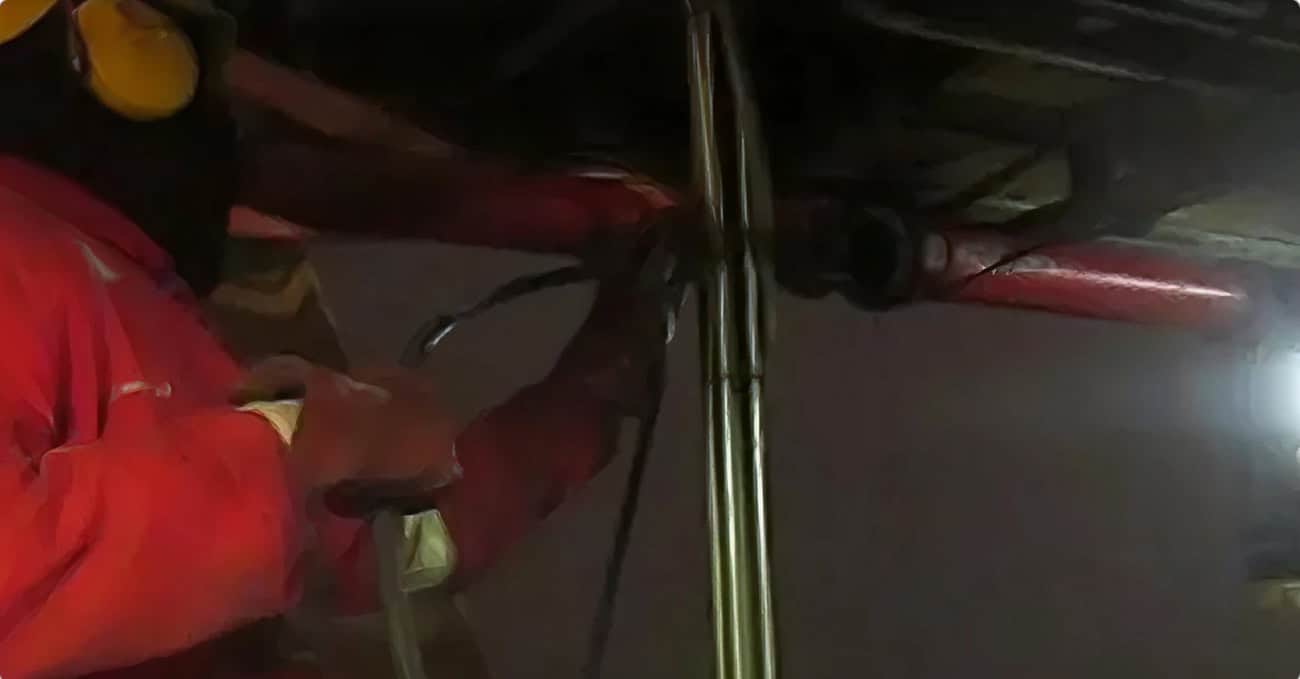
System Cleaning keeps deluge and firewater networks ready to perform when needed, without surprises at the worst possible moment. It’s a practical, cost-effective way to restore flow capacity, remove hidden restrictions, and keep your fire protection system compliant.
Paradigm Fire Protection Services delivers system cleaning as part of a wider integrity and compliance offering: removing and preventing flow blockages, flow restrictions, and blocked nozzles so your system remains dependable between inspection and testing cycles.
Why System Cleaning Matters
Deluge and firewater systems are safety-critical, but they’re also vulnerable to debris, corrosion products, scaling, and installation residue that silently reduce performance over time. When restrictions build up, you can see delayed discharge, uneven coverage, or test failures that trigger rework and extended impairment periods.
System cleaning is most relevant for assets where wet testing is disruptive or creates secondary issues (water ingress risk, contaminated discharge handling, accelerated corrosion). It’s commonly applied across offshore and onshore oil & gas, petrochemical plants, tunnels/infrastructure, and other high-availability sites where downtime is expensive and compliance evidence must be audit-ready.
It also supports performance verification: restrictions and debris directly affect friction/flow behavior, so cleaning (plus inspection) helps ensure test results reflect the system’s true condition—and makes troubleshooting faster when anomalies are found.
How We Deliver
We provide a structured cleaning approach designed around safe execution, minimal disruption, and clear proof-of-condition.
- Plan & protect operations: we implement an impairment plan and can maintain emergency cover with temporary fire equipment while cleaning is underway.
Target the root cause: we apply the most suitable technique per zone and condition, including:
1. Rotary power brushing
2. High-pressure micro-jetting systems
3. High-volume flushing
- Clean, then confirm: we verify outcomes using visual inspection and, where required, internal pipe condition checks and follow-up performance testing/commissioning support—so you can close out actions with objective evidence rather than assumptions.
Escalate if needed: if a system is beyond economic repair post-cleaning, we can replace like-for-like or upgrade to modern materials to restore compliance quickly.
What’s Included in System Cleaning
Depending on your asset and constraints, System Cleaning typically includes
- Scope definition (zones, tie-in points, constraints, acceptance criteria)
- Onsite cleaning execution using brushing, jetting, flushing and gel-based methods as appropriate
- Nozzle and restriction focus (blocked nozzle/removal of restriction sources, targeted remediation)
- Inspection support (including internal condition/obstruction investigations where required)
Impairment management & temporary protection cover to maintain readiness during works - Close-out documentation to support compliance and future testing baselines
These elements provide versatile, dependable solutions for demanding wells
FAQ
What does “System Cleaning” actually remove?
Paradigm drilling tools are specialized devices like Extreamer®, Driver®, Runner®, Reamer®, DRS, and Rebel® that mitigate dysfunctions in oil and gas wells. They integrate for borehole enlargement, vibration reduction, torque control, traction, stabilization, and cuttings removal. For instance, in horizontal drilling, they cut NPT by 10–20% and boost ROP through synergistic use.
When should we schedule deluge or firewater system cleaning?
Common triggers include failed or inconsistent test results, recurring blocked nozzles, post-modification debris risk, or when you want to establish a reliable baseline before verification testing. Cleaning is also valuable when wet testing creates operational or environmental complications and you want to reduce the likelihood of repeat failures and rework. In practice, it’s often planned alongside inspection and testing cycles.
Can cleaning be done without leaving the asset unprotected?
Yes. Where cleaning creates impairment, we implement a plan that keeps the site covered, including the option to maintain emergency protection using temporary fire equipment during the work. This reduces operational exposure while still allowing effective cleaning and verification activities to proceed.
How do you prove the system is clean enough after the work?
We don’t rely on “looks clean.” We close out with inspection evidence and, where required, internal obstruction/condition checks plus follow-up verification support so results are defensible to auditors and engineering stakeholders.
Dry-Flo-Total-Deluge-Services
In broader compliance programs, cleanliness/inspection evidence is a key input to making test outcomes meaningful and repeatable year-on-year.
What if cleaning finds damage or the system is beyond economic repair?
If cleaning reveals sections that can’t be restored cost-effectively, we can move straight into repair or replacement options, either like-for-like materials or upgraded solutions, so you can return to a compliant, maintainable system quickly. This avoids extended impairment and prevents repeating tests on a system that cannot meet performance requirements.
About Paradigm Fire Protection Services
About Paradigm Fire Protection Services
Paradigm Fire Protection Service offers performance based deluge testing technologies and remediation services.
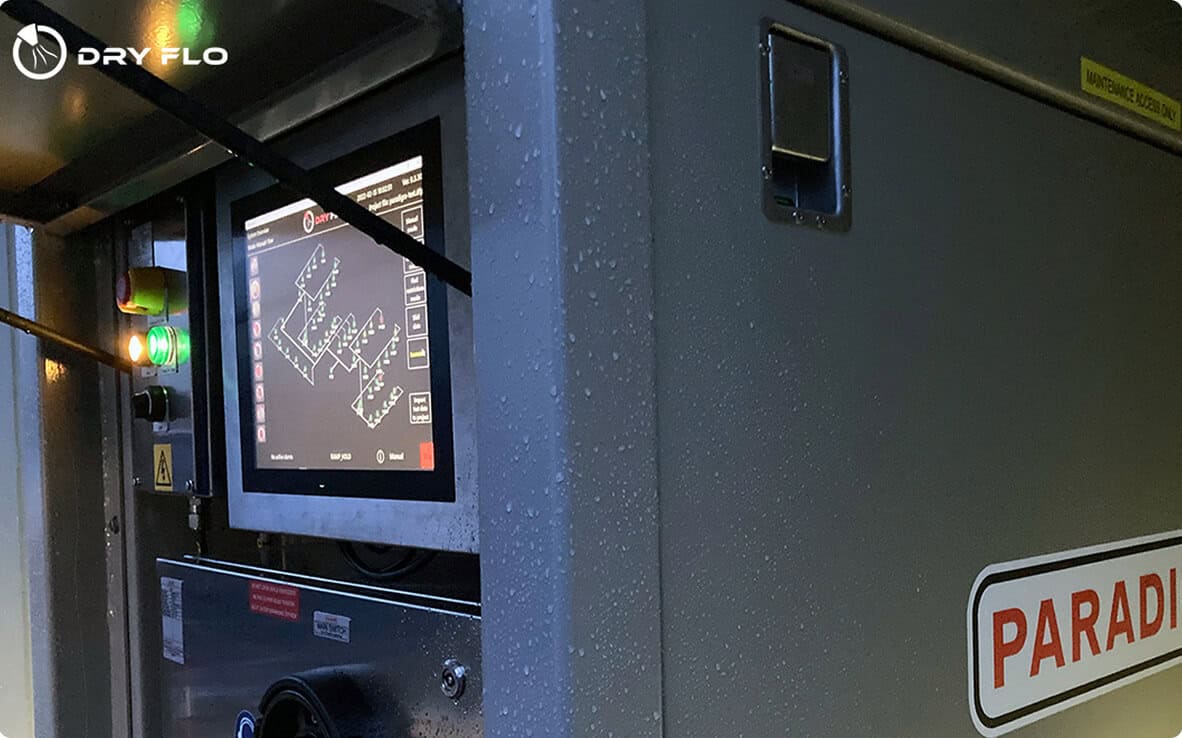
Save cost, reduce operational disruption and increase asset lifespan with Paradigm Dry Deluge Testing: The only verified dry deluge test in the world Dry-Flo® testing involves flowing low-pressure, dried air into the deluge system. At low pressures air replicates the flow of water exactly, enabling us to take readings throughout the deluge system to prove compliance. Our software package processes this information to give live data in both a graphical and numerical format so the operator can quickly identify whether a system is compliant. If this isn’t the case the software can immediately show the operator where the issue is within the system, allowing our technicians to inspect and remediate as necessary. Dry-Flo® has been qualified in accordance with DNV-DSS-401, Technology Management /1/ and DNV GL considers it qualified for its intended use following DNV RP-A203 /2/ and is currently undergoing Bureau Veritas and Lloyds Register certification procedures.
Contact Paradigm
Do you wish to discuss a project, have a technical product application question or need to know more about a product or service? Leave us your contact details and an expert from our team will be in touch with you shortly.
Paradigm Group BV is committed to protecting and respecting your privacy, and we’ll only use your personal information to administer your account and to provide the products and services you requested from us. From time to time, we would like to contact you about our products and services, as well as other content that may be of interest to you. You can unsubscribe from these communications at any time. For more information on how to unsubscribe, our privacy practices, and how we are committed to protecting and respecting your privacy, please review our Privacy Policy. By clicking submit button, you consent to allow Paradigm Group BV to store and process the personal information submitted above to provide you the content requested.