
Overview
Perforating at the wrong depth misses the intended reservoir interval, wastes a perforating run, and can damage completion integrity or create communication between unintended zones.

Detonation safety risk — particularly RF hazard from electronic equipment near perforating charges — is a persistent concern in live well perforating operations.
Why It Happens
Depth uncertainty accumulates from cable stretch, measurement offset between CCL spikes and charge positions, and surface measurement inaccuracy. In live well conditions with wellbore fluid effects and pressure, these errors are amplified. RF hazard arises from the use of electronic firing heads in environments with radio frequency sources, requiring strict exclusion zones that constrain operational flexibility.
How It Can Be Fixed
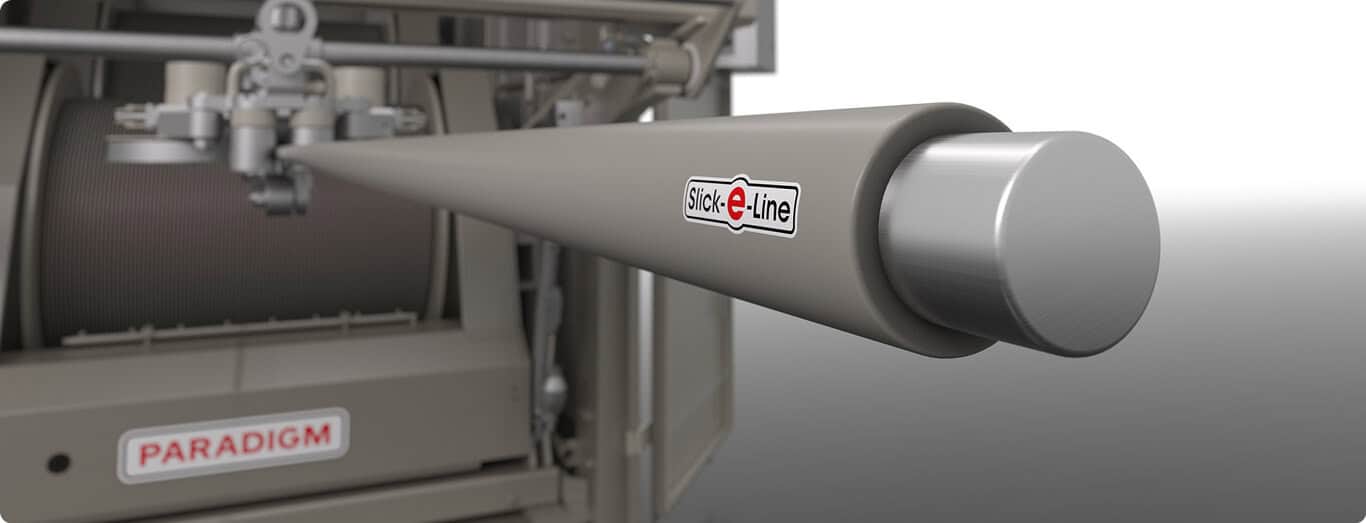
Use Paradigm’s Slick-E-Line® system for perforating operations with real-time CCL correlation, live downhole tension and vibration sensing, and RF safe firing system hardware. Multiple live sensor streams confirm exact tool depth against known casing collar positions in real time, while inbuilt hardware safety switches and RF safe design eliminate the detonation safety risk.
Why Paradigm
Paradigm’s Slick-E-Line® perforating service provides depth accuracy and safety assurance that conventional memory-tool slickline perforating cannot match. The combination of real-time CCL, downhole tension, vibration sensors, and RF safe electronic firing head hardware addresses both aspects of the problem depth certainty and detonation safety within the compact, cost-efficient slickline operating model that Paradigm’s Well Intervention division is built around.
Explore the technology
Related services
An expert from Paradigm can assist our customers during operations. Please contact us for further information.