
Overview
Flow assurance deposits, paraffin wax, asphaltenes, hydrates, scale, and biofilm accumulate inside production pipelines, risers, and process equipment.
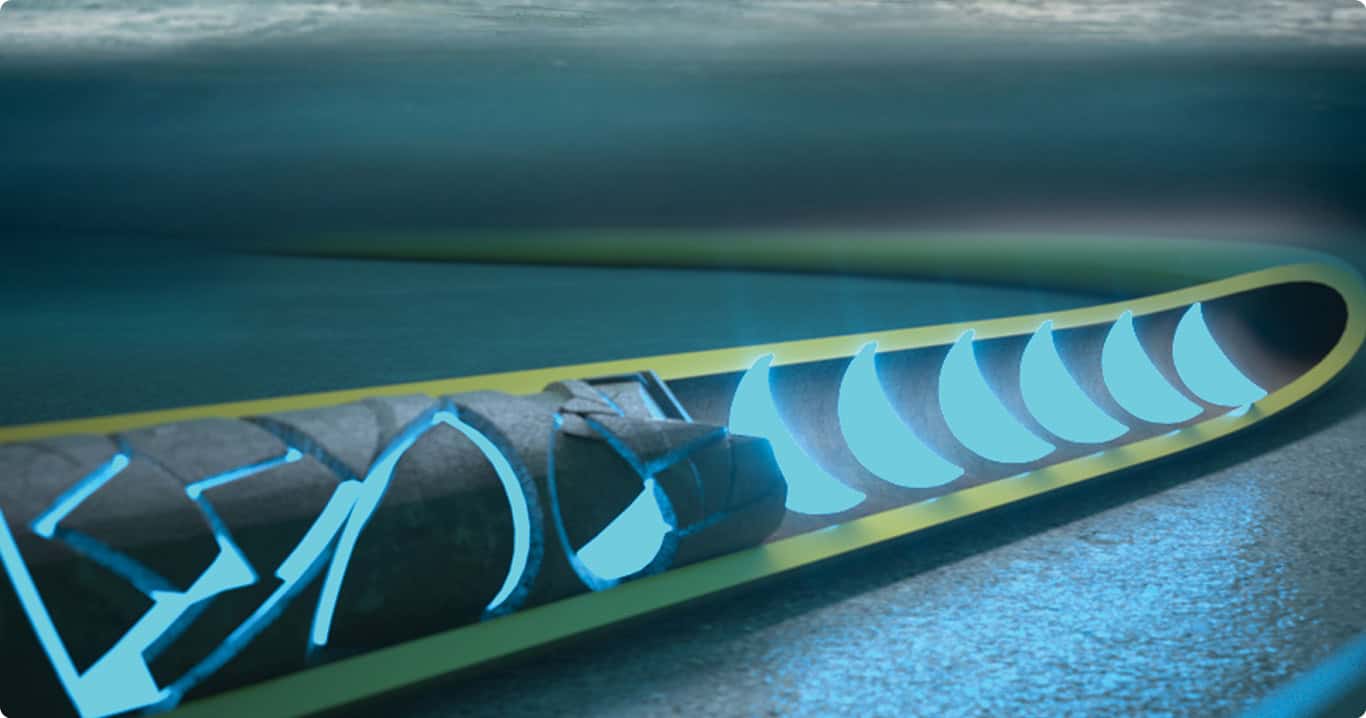
If left untreated, they reduce throughput, trigger shutdowns, and eventually cause full-bore blockages that are expensive and time-consuming to clear.
Why It Happens
Production fluids change pressure and temperature as they travel from reservoir to topside. These changes cause dissolved or suspended compounds to precipitate out of solution and adhere to pipe walls. The problem is compounded in subsea systems where low temperatures and high pressures accelerate deposition rates and where access for remediation is physically constrained.
How It Can Be Fixed
Implement a proactive flow assurance programme combining regular pipeline cleaning with targeted deposit removal. Paradigm’s Pipe-Pulse® generates controlled pressure pulses that break down and dislodge deposit structures non-intrusively, while Flexi-Coil® can physically access and clean areas unreachable by conventional methods. Chemical treatments can complement mechanical approaches.

Why Paradigm
Paradigm’s SUBS service offers guaranteed mobilisation within 48 hours, precise blockage location using STATIS® software, and a non-intrusive pressure pulse remediation method that avoids the need for costly DSV operations. The SUFU operates independently of vessel support once deployed, making the service weather-resilient and cost-effective — capabilities unique to Paradigm’s production enhancement division.
Explore the technology
Related services
Pipe-Pulse® is a non-intrusive technology which delivers controlled pressure pulse waves into high pressure lines, creating a dynamic force at the face of a blockage enabling its displacement from the
Flexi-Coil® is a patented technology specifically designed for the efficient remediation of material deposition within pipeline, riser, and flowline systems. It is built to operate directly from the product…