
Overview
Deluge system nozzles and pipework can become blocked by corrosion debris, scale, marine growth, or biofilm over time.
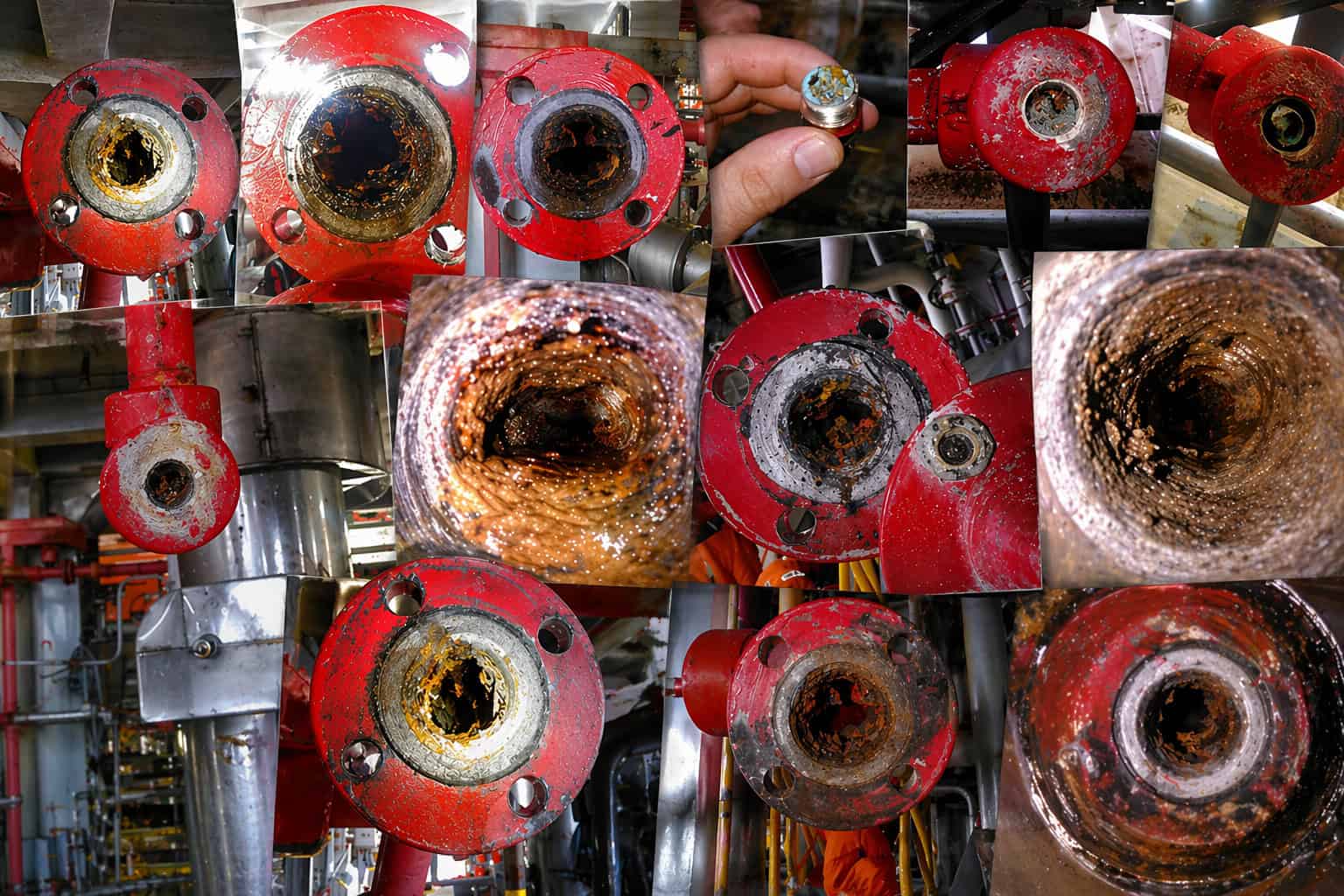
Blocked nozzles reduce system coverage, creating dead zones in fire protection that may not be detected until a live fire event — by which time the consequences are catastrophic.
Why It Happens
Between test intervals, deluge pipework is typically dry and unpressurised, creating an environment where corrosion products, scale, and biological debris accumulate. These deposits migrate to nozzle orifices during system activation. Conventional wet testing may not detect individual nozzle blockages if overall system pressure appears acceptable, masking localised coverage failures.
How It Can Be Fixed
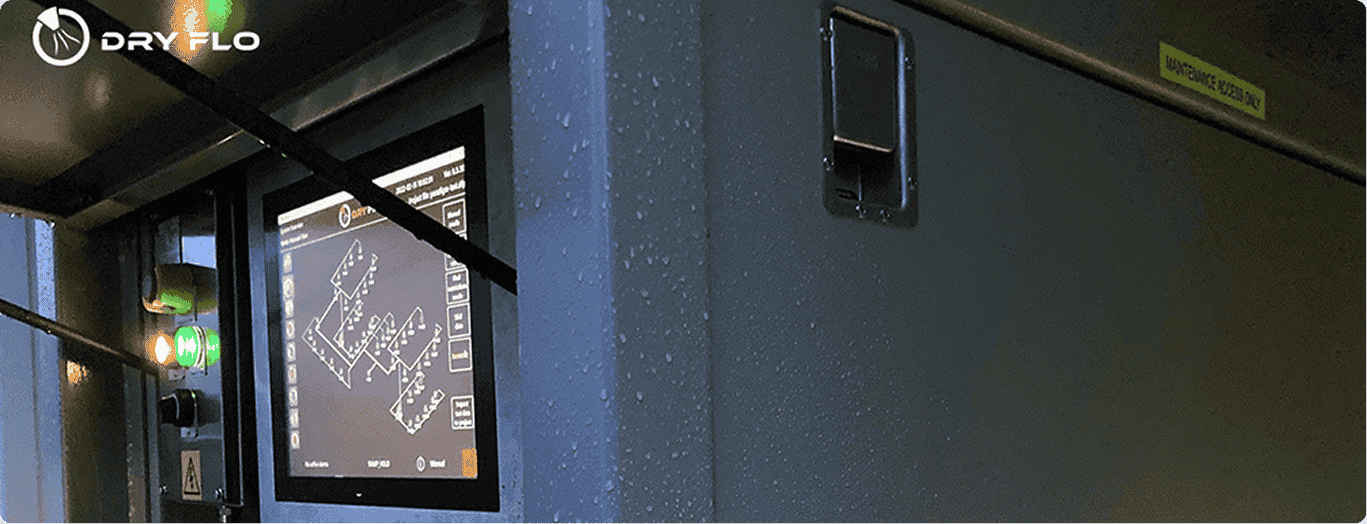
.Test the system with Paradigm’s Dry-Flo® technology, which measures individual flow rates per nozzle and identifies specific blockages and restrictions through graphical and numerical data output. Follow up with Paradigm’s specialist system cleaning and remediation services to clear identified blockages and restore full nozzle coverage and design flow performance.
Why Paradigm
Paradigm’s Dry-Flo® system provides nozzle-level flow data that conventional wet testing cannot reliably deliver — pinpointing exactly which nozzles are blocked and where restrictions exist in the distribution network. Paradigm’s fire protection division then offers system cleaning, repair, and replacement services to clear the identified faults, with temporary fire protection cover maintained during any remediation work.
Explore the technology
Related services
Performance Test and Verification is Paradigm’s service for proving the integrity and real-world capability of deluge and firewater systems using evidence, not assumptions. We combine remote visual inspection with engineering verification to identify what’s happening inside your firewater
Foam Testing: Fire‑fighting foam testing is the process of evaluating foam concentrates and system performance to ensure they will work effectively during an emergency. It typically involves collecting representative foam samples, followed by laboratory analysis to check properties such as pH, specific
System Cleaning keeps deluge and firewater networks ready to perform when needed, without surprises at the worst possible moment. It’s a practical, cost-effective way to restore flow capacity, remove hidden restrictions, and keep your fire protection system compliant.
Inspections of fire suppression systems involve a systematic check to ensure all components would function properly when called upon. This process typically includes external and internal inspections where suitable. Inspections can vary depending on equipment. Some may require just a visual
Pipe fabrication is the process of cutting, preparing, assembling and the fitting of pipework that forms the fire suppression system of an asset. Fabrication involves cutting pipes to precise lengths, threading or grooving ends, attaching the required fittings so that each section matches the
Maintenance of fire suppression systems involves routine inspections, testing and servicing to ensure the equipment operates effectively in an emergency. It typically includes checking components such as controls, extinguishing agents (gaseous), piping networks, discharge mechanisms for damage
Pipe fabrication is the process of cutting, preparing, assembling and the fitting of pipework that forms the fire suppression system of an asset. Fabrication involves cutting pipes to precise lengths, threading or grooving ends, attaching the required fittings so that each section matches the
Maintenance of fire suppression systems involves routine inspections, testing and servicing to ensure the equipment operates effectively in an emergency. It typically includes checking components such as controls, extinguishing agents (gaseous), piping networks, discharge mechanisms for damage