
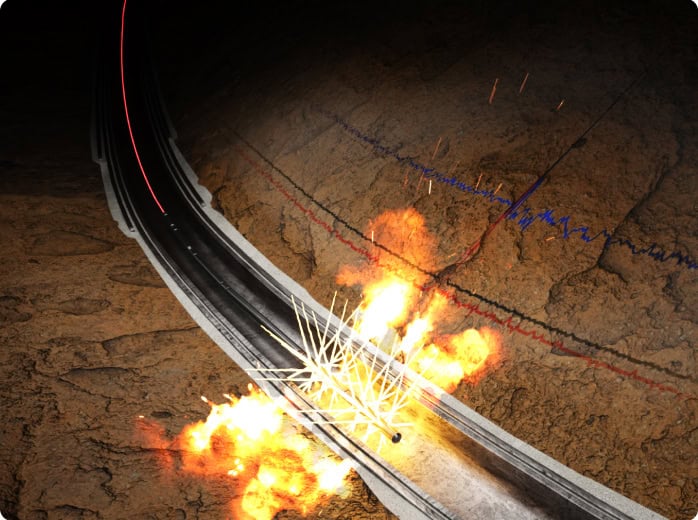
Perform Explosive Interventions in Live Wells with Real-Time Confidence
Explosive operations in live wells perforating, severance, or string shots carry inherent depth accuracy and safety risks.


Explosive operations in live wells perforating, severance, or string shots carry inherent depth accuracy and safety risks.

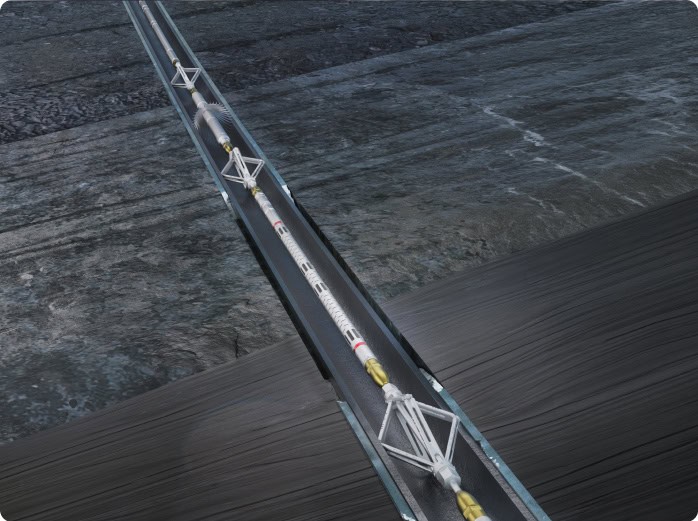
Isolating specific zones in a well for workover, shut-off, or P&A without mobilising a rig is technically challenging.
Poor cement bonding between casing and formation creates migration pathways for formation fluids, leading to sustained annular pressure, surface casing vent flows, and uncontrolled fluid communication between zones.
Conventional slickline operations generate non-productive time (NPT) because they lack real-time downhole communication.
Perforating at the wrong depth misses the intended reservoir interval, wastes a perforating run, and can damage completion integrity or create communication between unintended zones.
Subsea umbilical blockages cut off the control and chemical injection pathways that subsea trees and manifolds depend on.
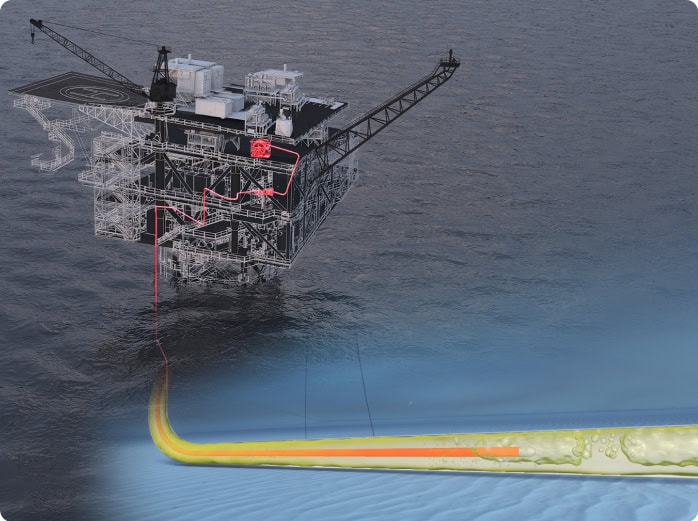
Many pipeline systems, particularly those with multiple short-radius bends, small bore sections, or risers, cannot be cleaned by conventional pigging.
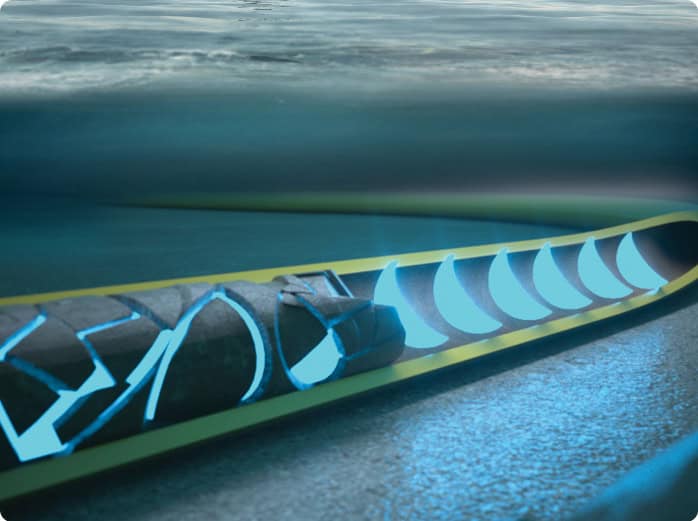
Flow assurance deposits, paraffin wax, asphaltenes, hydrates, scale, and biofilm accumulate inside production pipelines, risers, and process equipment.
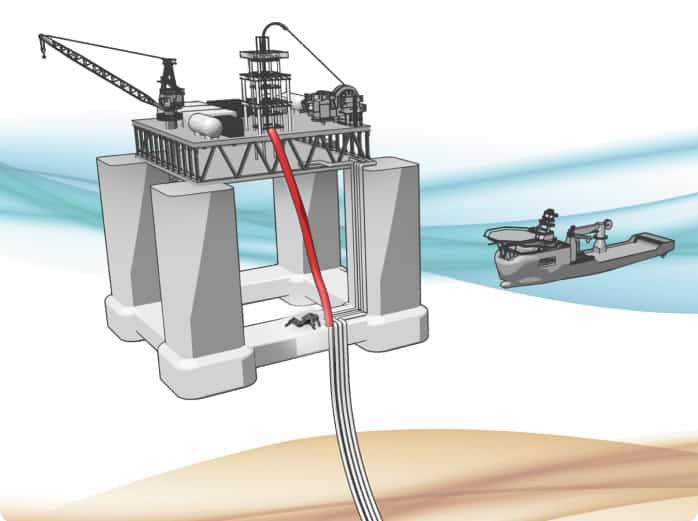
Conventional pipeline cleaning methods pigging, chemical batch treatments, or rig/vessel-based coiled tubing typically require partial or full production shutdown, DSV or rig mobilisation, and significant pre-job preparation.
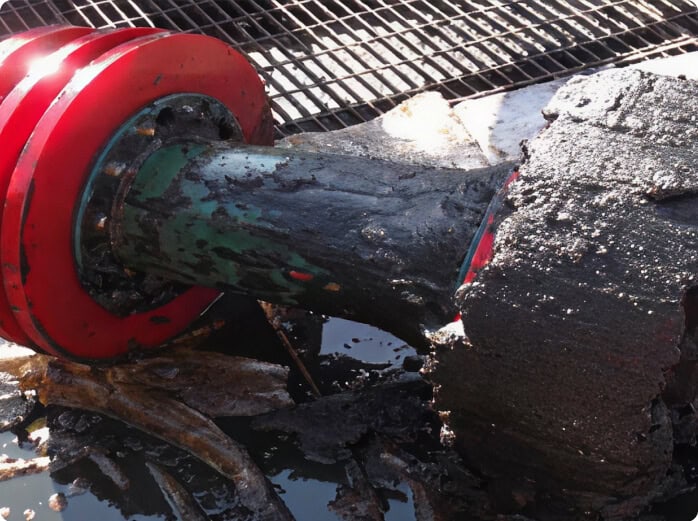
A pig lodged inside a pipeline disrupts inspection schedules, blocks chemical batch treatments, prevents future pigging, and creates uncertainty about pipeline condition.